Control systems
- Pure Pursuit
- Stanley steering
- Curvature-based PID
- Vehicle dynamics
Proof: BGR stack, orbital LQI
Software development · Algorithms · Applied AI
I build Python software for autonomous systems: planning and control, diagnostics, computer vision and applied AI.
And the occasional side quest that somehow becomes a working prototype.
Open to R&D and software roles in autonomy, robotics and applied AI. Tel Aviv, open to remote or relocation.
Hire Me Command Center
Recruiters shouldn’t need a treasure map. Pick the role you’re hiring for and I’ll line up the projects, the tools and the honest reason I fit.
selected role
I connect controls, perception, code, and physical constraints without pretending robots live in clean PowerPoint rectangles.
I’m Yuval, a software developer with a mechanical engineering degree. I work on algorithms, Python systems and applied AI.
From July to September 2026 I worked full-time on a UGV defense project. I built a shared Python backend and operator interfaces for command handling, telemetry and diagnostics, then made failures traceable: logging across four components, thread-timing diagnostics, watchdogs and heartbeat handling.
At BGR Formula Student I led the five-person planning and control group from 2023 to late 2025 and wrote code alongside them. Our car drove about 50 metres autonomously, navigating ego-centrically without a working IMU.
I like turning an unclear problem into a model I can inspect, a first version I can run, and an experiment that tells me what to change.
toolbox
Software and algorithms I have used in projects I can explain.
Proof: BGR stack, orbital LQI
Proof: BGR Formula Student, UGV work
Proof: repo summarizer ↗
Proof: FPV lab, movers agent ↗
selected proof
Each one shows the useful part: the math, the system, the code, and enough polish that you can inspect it yourself.
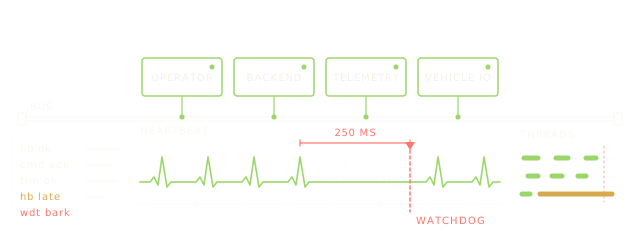
Make commands, state and failures traceable across a robot’s software.
Full-time, July–September 2026. I built a shared Python backend and operator interfaces for command handling, telemetry and diagnostics, then added logging across four components, thread-timing diagnostics, watchdogs and heartbeat handling.
Read my contribution ↗Private defense project. Public description only.
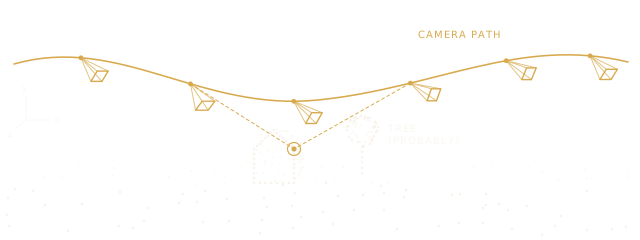
Work in progress
Inspect what reconstruction methods recover from FPV footage.
I ran VGGT on another creator’s public dataset, added experimental reconstruction methods, smoothing and a WebGL viewer, and published 13 scene packages. The dataset and base models are not mine; evaluation remains experimental.
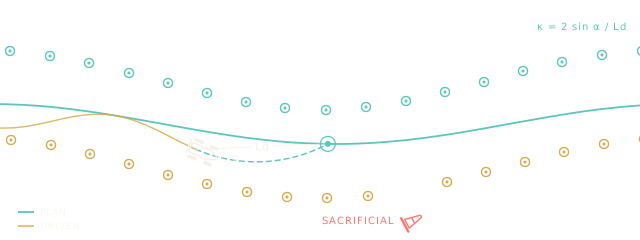
A driverless race car needs a path it can actually follow.
I led five student developers from 2023 to late 2025 and co-wrote the stack: an adapted cone planner, Pure Pursuit and Stanley steering, and curvature-based PID speed control. We tested in simulation and on physical steering and wheel actuators; the car drove about 50 metres autonomously.
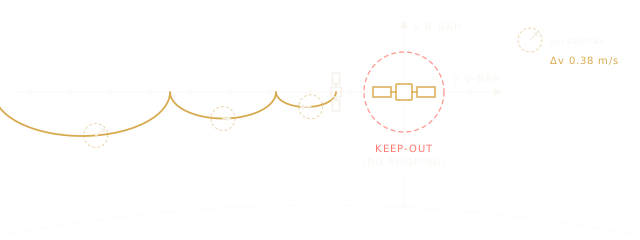
Bring a chaser to its target while respecting limited thrust.
Two-body propagation, Clohessy–Wiltshire rendezvous dynamics, and an LQI controller with Bayesian-optimised cost weights, compared against constrained MPC. A Streamlit viewer and reproducible plots make every trajectory inspectable.
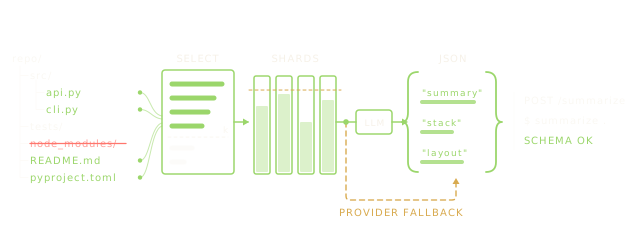
Understand an unfamiliar repository without opening every file.
A FastAPI service and CLI with deterministic file selection, adaptive sharding and validated JSON output. Provider fallbacks and mocked API tests make failure handling part of the design, not an afterthought.
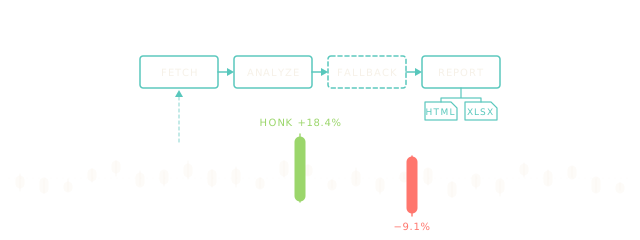
Explain the market movers, beyond a ticker and a hot take.
A four-stage LangGraph workflow (researcher, analyst, critic, recommender) that produces HTML and Excel reports. LLM analysis is optional, with deterministic fallbacks and tests; the published sample uses the heuristic path.
Research in simulation
Can a complete fly connectome guide a robot arm?
I connected all 165,122 neurons of the MaleCNS connectome to a simulated SO-101 arm, with every synapse left as mapped and only a linear readout trained. In simulation, the arm follows a live human hand with a 17.8 mm median error.
PID steering sandbox
The mint line is the plan. The amber trail is what actually happened.
Try this: Reset the route, nudge the heading +15°, then press Play. Can you reduce the wobble with Kp and Kd?
Related work: BGR path planning & control ↗PID acts on the heading error to a point 0.8 m ahead on the route. Kp reacts now, Ki accumulates error, and Kd damps changes. Try Kp 6, Kd 0 at high speed, then add damping and compare.
A kinematic bicycle model with a 0.85 m wheelbase, steering limited to ±37°, bounded integral and a fixed 1/120 s step. The car starts 0.35 m off the line. Cone contact, tyre slip, sensors, and real vehicle dynamics are not modelled. This is an educational simulation.
Drag or use arrow keys to orbit. Wheel or +/− to zoom.
Interactive preview loads when it enters view.
Pause after at least 3 seconds and save. Reset the route, retune and try again. Keep the scenario, speed and heading-disturbance timing the same.
One baseline, kept only while this page is open.
Pause after 3 seconds to save a baseline.
Space GNC · relative motion
A target, a chaser, and very little thrust.
Try this: Reset, set thrust to 0.2 N and leave guidance on. Press Play and watch the range close; add an impulse to test the recovery.
Related work: orbital rendezvous ↗The target frame rotates with a circular orbit 700 km above Earth. Axes: x radial, y along-track, z orbit-normal. Coordinates are relative metres; vehicle sizes are enlarged for visibility.
This browser version integrates the same CW equations as my orbital study, using a simple bounded PD controller on a 100 kg chaser. It does not run the repo’s LQI or MPC solver. Time runs at 40×; no attitude dynamics, docking-contact model, or flight validation.
Visual perception · experimental lab
A moving pattern can feel solid. What gives it depth?
Try this: Play with depth cues at 0, then raise them to 100. Does the apparent rotation become easier to read—or change?
This is a structure-from-motion sketch, inspired by the kinetic depth effect. With depth cues at zero, there is no depth shading, and the projection is orthographic. Front and back are ambiguous. The slider gradually adds perspective and front-to-back shading.
Structure blends a rotating dot sphere with a fixed, seeded cloud. Pause and use “Turn the form” to explore without animation. It illustrates a visual problem, not a measure of your perception or a model of the brain.
The model explanation and project links remain available. A WebGL2 browser is needed for this view.
Choose a lab to load the view.
Visual geometry · work in progress
Explore a point cloud and recovered camera path from published FPV footage. Compare what the reconstruction methods recover.
Existing VGGT model, another creator’s public dataset. My work adds methods, smoothing and a viewer across 13 scene packages. Evaluation is ongoing; coordinates are relative.
Loads on request. On a phone, the full viewer gives the controls more room.
Connectome · real data
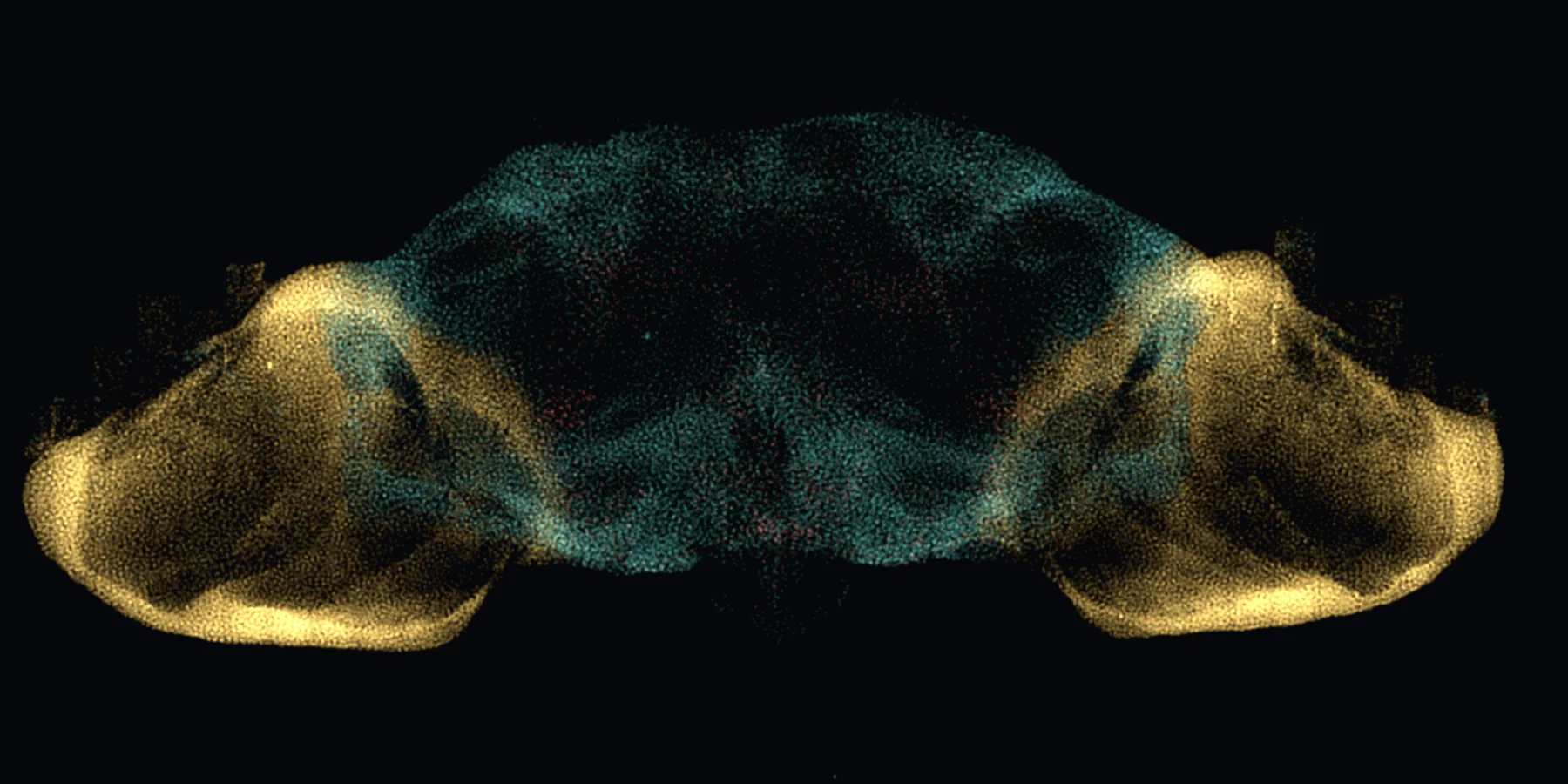
Every dot is a real neuron position from the MaleCNS fruit-fly connectome. Drag to turn it, then switch regions off to see how a nervous system is built.
Loading neuron positions…
Showing a 42,000-neuron sample of the 165,122 in the connectome. Anatomy only: this view does not simulate activity.
See the Fly101 project →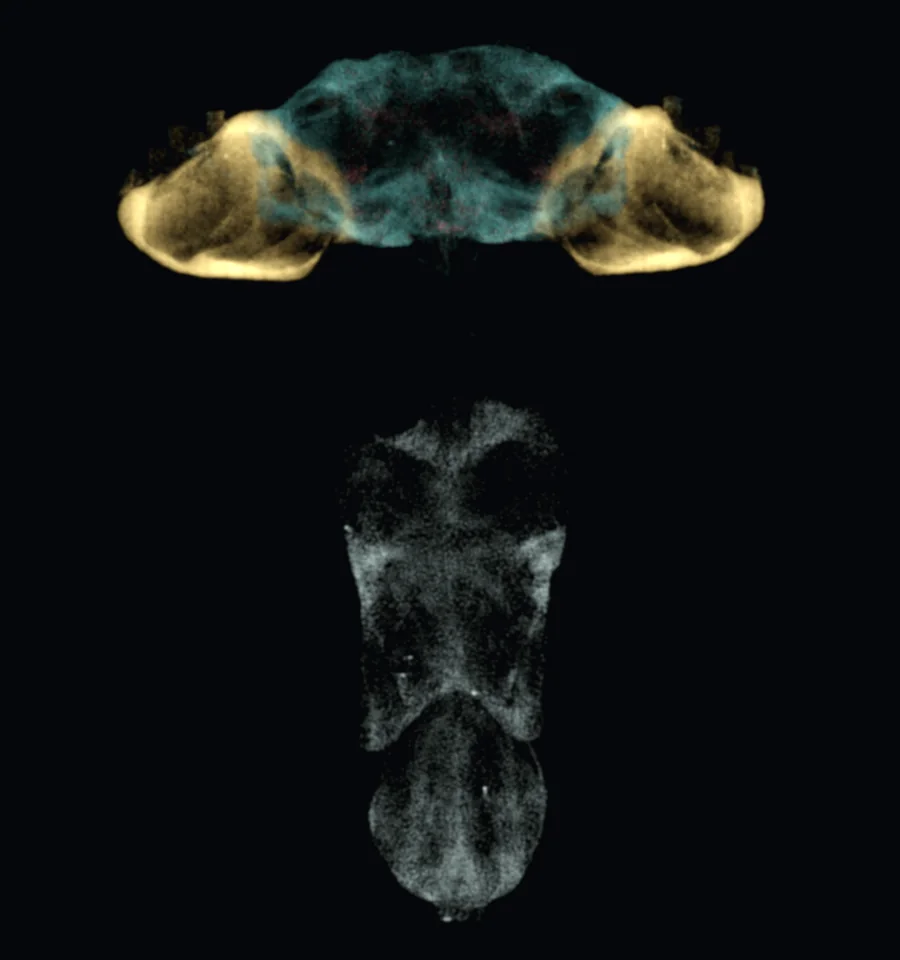
lab layer
The command palette keeps the full GitHub snapshot categorized as Featured, Lab, Tools, Learning Archive, and Forks / References. Public categories, private scoring. Very civilized.
What legendary figures would say about my work (if they could see this portfolio)
"Holy sh*t, this is the best engineering portfolio I've ever seen! And I've seen... well, not much because I'm blind, but this one SOUNDS amazing!"
"It made me walk again! Well, not literally - I'm still dead. But if I were alive, Yuval's control systems would definitely help me get around faster than my wheelchair ever did."
"Damn, I wish I had hired Yuval for Tesla autopilot. We probably wouldn't have crashed into all those traffic cones. This guy actually knows what he's doing!"
"E=mc² was cute, but Yuval's control algorithms? That's the real theory of everything! I'm literally jealous of a guy who wasn't even born yet when I died."
"I've seen 14,000,605 possible futures. In ALL of them, Yuval gets the job. In 14,000,604 of them, he also gets a raise within 6 months."
* Reviews may be slightly exaggerated for comedic effect. The engineering skills are real, the humor is opt-in, and the terminal is where the page stops pretending to be normal.
Engineering first. Personality second. Still, life is too short for beige office-chair energy. Bring the goose.
A collection of moments captured from travels near and far. This is the world as I see it.


Helpful guide first, dumb joyful desk menace second. He is not qualified to review pull requests, which has never stopped anyone.

Most of the site behaves. Some of it has opinions. That is called range.
I can debug autonomous vehicles AND explain why pop-up headlights were engineering art
Obsessed with how brains perceive and control. I borrow those patterns (attention, feedback, redundancy) to build simpler, more robust systems. Broad horizons, cross-pollinated ideas.
Guitar, drums, and an awkward French-horn phase—like a classic ADHD kid, I can’t stick to just one instrument. Music’s been my long-term jam session for timing, coordination, and creative flow.
I speak fluent robot. They usually listen. Sometimes they plot against me.
curated classics shelf
Games I would actually defend in a meeting. Six old-school classics that still explain timing, constraints, flow, and why children in the 90s developed suspiciously strong patience.
Local multiplayer chaos with clear rules, readable feedback, and enough punch-per-pixel to justify the nostalgia.
Territory capture, risk control, and arcade pressure. Basically planning under uncertainty, but neon.
Physics, timing, failure recovery, and the emotional damage of overconfidence. A whole curriculum on two wheels.
Fast platforming, green attitude, and a soundtrack with more swagger than most sprint demos.
Small, brutal, and instantly readable. A reminder that level design can be simple and still bully your ego.
Space-road reflexes, fuel anxiety, and the exact amount of punishment old PC games considered normal.
nomination lane
Suggest one. The bar is simple: memorable mechanics, inspectable source page, and at least one lesson besides “old games hated children”.
Hiring for controls, autonomy, simulation, or tooling? Have a project that needs another pair of hands? I’d like to hear about it.
Based in Israel · Open to remote work or relocation